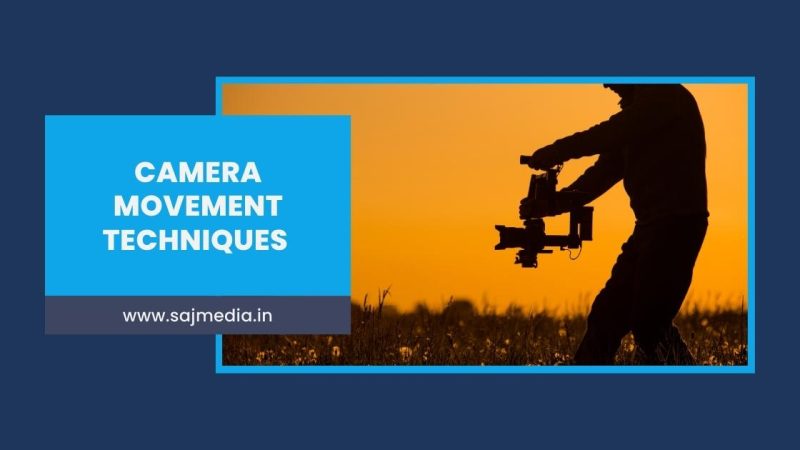
A static camera records. A moving camera tells a story.
The difference between footage that feels flat and footage that feels cinematic is often not the camera, the lens, or the lighting. It is whether the camera movement techniques were chosen intentionally — or not chosen at all.
This guide covers every major camera movement techniques used in filmmaking and video production, what each one communicates emotionally, and when to use it. By the end, every camera move you make will have a reason behind it.
KEY TAKEAWAYS
- Every camera movement should have a narrative or emotional motivation — never move the camera just because you can
- Pan and tilt pivot the camera from a fixed point — they are the most accessible movements to learn
- Dolly and tracking shots physically move the camera through space, creating depth that zooming cannot replicate
- The dolly zoom (Vertigo shot) is one of cinema’s most powerful and recognisable techniques
- Gimbals make previously expensive movements accessible to solo creators on any budget
Why Camera Movement Matters
Camera movement is one of the most powerful storytelling tools in video production. Each type of camera movement technique communicates something different to the audience — tension, intimacy, scale, disorientation, energy.
A slow push toward a character’s face builds dread. A sweeping crane shot signals grandeur. A shaky handheld shot creates urgency and realism. None of these effects come from the subject alone — they come from how the camera moves around the subject.
The fundamental rule of camera movement: every move should be motivated. If you cannot explain why the camera is moving at a specific moment in a specific direction, the move is probably distracting rather than serving the story.
The Core Camera Movement Techniques
| Movement | How It Works | Primary Use |
| Pan | Camera pivots left or right on a fixed horizontal axis | Follow action, reveal environments, connect subjects |
| Tilt | Camera pivots up or down on a fixed vertical axis | Reveal scale, establish height, follow vertical movement |
| Dolly | Camera physically moves forward or backward on a track | Build tension, create depth, show intimacy |
| Truck (Crab) | Camera physically moves left or right on a track | Follow action horizontally, explore environments |
| Tracking Shot | Camera follows a subject through space | Immerse the viewer, maintain continuity with moving subjects |
| Crane / Jib Shot | Camera rises or falls on a mechanical arm | Grand reveals, sweeping establishing shots, transitions |
| Pedestal | Camera moves physically up or down on a fixed vertical axis | Frame tall subjects, reveal vertical elements |
| Handheld | Camera held by operator with no stabilisation | Urgency, realism, chaos, intimacy |
| Steadicam / Gimbal | Stabilised handheld — smooth movement without a track | Long following shots, moving through spaces |
| Zoom | Lens focal length changes — camera stays still | Draw attention to a subject, quick dramatic effect |
| Dolly Zoom | Camera moves while zoom compensates — subject stays same size | Disorientation, fear, sudden realisation |
| Whip Pan | Extremely fast pan creating motion blur | Scene transitions, energy, passage of time |
Pan Shot
A camera pan shot pivots the camera horizontally — left to right or right to left — while the base stays fixed on a tripod or fluid head. It is the most common and accessible camera movement technique.
Slow pans feel calm and contemplative — they survey a landscape or reveal a room. Fast pans feel energetic or urgent. The whip pan, the fastest version, creates a motion blur transition used to move between subjects or indicate the passage of time.
When to use it: To follow a subject moving horizontally, to reveal a panoramic environment, to connect two subjects within a scene, or to transition between locations.
Tilt Shot
A tilt moves the camera vertically on a fixed axis — up or down — while the base stays in position. It is distinct from a pedestal shot, where the entire camera rises or falls.
Tilting up from the ground to the top of a building communicates scale and awe. Tilting down from a character’s face to their hands during a tense moment draws attention to what they are doing without cutting. A slow downward tilt onto a subject can signal dominance or threat.
When to use it: To reveal vertical scale, to follow vertical movement within a scene, to transition smoothly from one visual element to another without a cut.
Dolly Shot
A dolly shot physically moves the camera forward or backward through space, mounted on a wheeled platform that travels along a track. It is one of the most expressive camera movement techniques in filmmaking because it creates true depth change — something a zoom cannot replicate.
Dollying in toward a character builds tension or intimacy — the audience moves closer to the subject as if drawn in. Dollying out creates distance, which can signal loss, isolation, or revelation. The slow dolly in is one of the most reliable tools for building dread in dramatic scenes.
Practical alternative: A camera slider gives creators a shorter dolly-style movement without the expense of a full track system. A gimbal walking toward or away from a subject also approximates a dolly move.
Tracking Shot
A tracking shot follows a subject as they move through a scene — moving parallel to them, behind them, or in front of them. It keeps the subject in frame while the environment moves past behind them.
Tracking shots create immersion. When a camera follows a character through a hallway, a crowd, or a battlefield, the audience feels physically present in the scene. Some of cinema’s most celebrated shots are long, unbroken tracking shots — from Goodfellas to Children of Men.
When to use it: To follow characters in motion, to maintain continuity through dynamic scenes, to immerse the viewer in the environment alongside the subject.
Crane and Jib Shot
A crane shot mounts the camera on a mechanical arm that can rise high above the action and move in multiple directions simultaneously. A jib is a smaller, more affordable version with limited range.
Crane shots are often used for dramatic reveals — rising away from a character to expose the scale of the world around them, or descending into a crowd. They are also used for grand establishing shots and memorable final images.
Practical alternative: A drone captures aerial perspectives that previously required a helicopter or expensive crane. Even small consumer drones now produce footage comparable to professional crane work.
Handheld and Steadicam / Gimbal
A handheld shot is an unstabilised shot where the camera operator physically holds and moves the camera. The resulting shake creates a sense of urgency, realism, and immediacy. Documentaries and war films rely on handheld footage because it feels like the camera is in the middle of events, not observing from outside.
A Steadicam or gimbal adds stabilisation to handheld movement, producing smooth, flowing shots without the need for a dolly track. The gimbal has made this movement accessible to solo creators and small productions — what once required specialised equipment and operators can now be achieved by one person walking through a space.
When to use handheld: Action sequences, documentary coverage, scenes requiring urgency or emotional rawness. When to use gimbal: Following shots through spaces, long takes, scenes needing fluid movement without a track.
The Dolly Zoom (Vertigo Shot)
The dolly zoom is one of the most technically striking camera movement techniques in cinema. It combines two opposite movements simultaneously: the camera physically moves forward or backward while the zoom lens compensates in the opposite direction. The result is that the subject stays the same size in the frame, but the background appears to compress or expand dramatically.
Alfred Hitchcock and cinematographer Irmin Roberts invented the technique for Vertigo in 1958. Since then it has appeared in Jaws, Goodfellas, and Jurassic Park. It is best used to heighten disorientation, fear, or a sudden shift in a character’s psychological state.
It is not a subtle technique. Use it once in a project, at the moment of maximum emotional impact.
Read: Types of Shots in Film Every Video Creator Should Know
FAQ
Start with the pan and tilt. They require only a tripod with a fluid head, they are the most used movements in any production, and they teach you the fundamentals of motivated camera movement. Once you understand when and why to pan or tilt, every other movement becomes easier to reason about.
A dolly physically moves the camera through space, which creates a true change in depth and perspective — objects in the foreground and background shift in relation to each other. A zoom changes the lens focal length without moving the camera, which narrows the field of view but does not create the same depth shift. Dollying feels natural to the eye. Heavy zooming can feel artificial.
A gimbal is the most accessible tool for smooth movement on any budget. It stabilises handheld footage and allows tracking shots, arc shots, and following shots without a dolly track. A slider gives dolly-style push and pull movement in a compact, affordable form. For pans and tilts, a tripod with a fluid head is essential — a cheap tripod with a stiff head produces jerky, unusable movement.
A whip pan is an extremely fast horizontal pan that creates motion blur as the camera swings between subjects or locations. It is most commonly used as a scene transition, to convey energy and pace, or to show the passage of time. It works best when both the shot before and after the whip pan share a similar tonal quality.
No. Static shots are just as powerful as moving shots. The key is intentionality. A perfectly still camera during a tense dialogue scene creates a different kind of tension than a moving one. The worst camera movement is unmotivated movement — moving just to fill the frame with action. Every move should serve the story.
Conclusion
Mastering camera movement techniques is not about learning to operate complex equipment. It is about understanding what each movement communicates and choosing the right one for each moment in your story.
A pan reveals. A tilt scales. A dolly draws in or pulls away. A tracking shot immerses. A crane lifts perspective. A handheld shot drops you into the chaos. Each one is a storytelling tool with a specific emotional register.
Start with a pan and a tilt. Add a gimbal. Practice dolly moves with a slider. Build your vocabulary of movement one technique at a time — and always ask why the camera is moving before you press record.

Leave a Comment
Your email address will not be published. Required fields are marked *