You already own a good camera. A Sony, a Canon, a Fujifilm — something with a proper sensor that cost real money and takes genuinely good footage.
And you never take it out.
Because it’s heavy. To setting it up takes ten minutes. Because you are not going to pull out a rig, a gimbal, and a microphone every time something worth filming happens. So you film it on your phone instead, and the footage is fine but not what you wanted.
A compact vlog camera solves exactly this problem. Not by replacing your main camera — but by being the one you actually have with you. The one that comes out in two seconds. The one that lives in your bag without taking up the whole bag.
This guide picks the right one for different types of creators. No commission-first recommendations. No padding the list with cameras that don’t belong.
KEY TAKEAWAYS
- The best compact vlog camera is the one that matches YOUR shooting style — not the most expensive one
- DJI Osmo Pocket 3 wins for walk-and-talk solo vlogging — nothing matches its gimbal stability
- Canon PowerShot V1 wins for hybrid creators who want photos AND video in one pocket camera
- Sony ZV-1 II wins for creators who want the best autofocus in a true compact body
- Sony ZV-E10 II wins if you want interchangeable lenses in a small body — not a true compact but worth knowing
What Actually Makes a Good Compact Vlog Camera
Before the recommendations — the criteria. Because every list online uses different standards and most of them prioritise specs that don’t matter in real use. For a compact vlog camera, the only specs that matter are these:
| What Matters | What It Means in Real Use |
| Flip or articulating screen | You need to see yourself when filming solo. Non-negotiable. |
| Autofocus that tracks faces | If you’re moving and talking, manual focus is not realistic. |
| Built-in stabilisation | Handheld footage is unwatchable without OIS or a gimbal. |
| Size and weight | If it doesn’t fit in a jacket pocket or small bag, you won’t carry it. |
| Microphone quality | External mics help but the built-in mic needs to be usable. |
| Battery life | Under 60 minutes is frustrating for a day out. |
| 4K recording | Minimum for future-proofing. Crop factor matters. |
Sensor size matters too — but not as much as the above. A 1-inch sensor in good light produces footage indistinguishable from an APS-C in most online-viewing contexts. Worry about the practical factors first.
The Best Compact Vlog Camera for Each Creator Type
Best for Solo Walk-and-Talk Vlogging: DJI Osmo Pocket 3
If you film yourself walking, talking, or moving through environments without a second person behind the camera — the DJI Osmo Pocket 3 is the answer. Nothing else in this size category matches what it does.
The three-axis mechanical gimbal is built into the body. Not software stabilisation — a physical gimbal that keeps the footage smooth regardless of how you move. Combined with face tracking that keeps you in frame even when you’re not looking at the camera, it is the closest thing to having a camera operator in your pocket.
The 1-inch sensor produces genuinely good footage in daylight and holds up reasonably well in low light. The 2-inch rotating touchscreen lets you frame shots in either horizontal or vertical orientation without repositioning the camera. 4K 120p is available for slow motion.
The honest drawbacks: photos are mediocre — it is a video-first device. The lens is fixed at a fairly wide angle with no zoom. In very low light, larger sensor cameras will outperform it.
Price: approximately $500 | Best for: travel vloggers, solo creators, daily vloggers who move a lot
Best for Hybrid Photo and Video: Canon PowerShot V1
The Canon PowerShot V1 is the compact camera that made the most noise in late 2025, and rightfully so. It carries a 1.4-inch sensor — larger than the 1-inch sensors in most competing compacts — paired with a 16-50mm equivalent zoom lens that is genuinely useful for a variety of situations.
The built-in ND filter is something most cameras at this price do not offer. It lets you control depth of field in bright conditions without overexposing — a feature that matters if you understand exposure. The built-in cooling vents mean you can record 4K video without hitting a time limit.
For creators who want one pocketable device that handles both photography and vlogging at a high level — the V1 is the current best answer.
The honest drawbacks: the lens aperture is relatively slow (f/2.8 at wide end), which partially offsets the large sensor advantage in low light. No in-body image stabilisation on the sensor itself. Price is high relative to competing options.
Price: approximately $900 | Best for: hybrid creators, travel photographers who also vlog, creators who want one quality compact
Best Autofocus in a True Compact: Sony ZV-1 II
Sony’s ZV line exists specifically for creators and the Sony ZV-1 II shows it. The 18-50mm equivalent lens is wider than the original ZV-1, making it better for vlogging where you need to include yourself and some background. The 1-inch sensor, 4K video, and flip screen cover the fundamentals.
What separates it is Sony’s autofocus. The face and eye tracking is class-leading in this size category — if your face is in frame, the camera will find it and hold it. The built-in directional three-capsule microphone is also genuinely good, producing usable audio without an external mic in most conditions.
The built-in ND filter, while only a single step, is a thoughtful addition. The Product Showcase mode shifts focus from your face to objects held up to the camera — useful for review content.
The honest drawbacks: no optical image stabilisation (only electronic), which can produce footage that feels slightly stiff compared to gimbal alternatives. The zoom range is limited.
Price: approximately $750 | Best for: talking-head vloggers, review creators, anyone who needs reliable autofocus above everything else
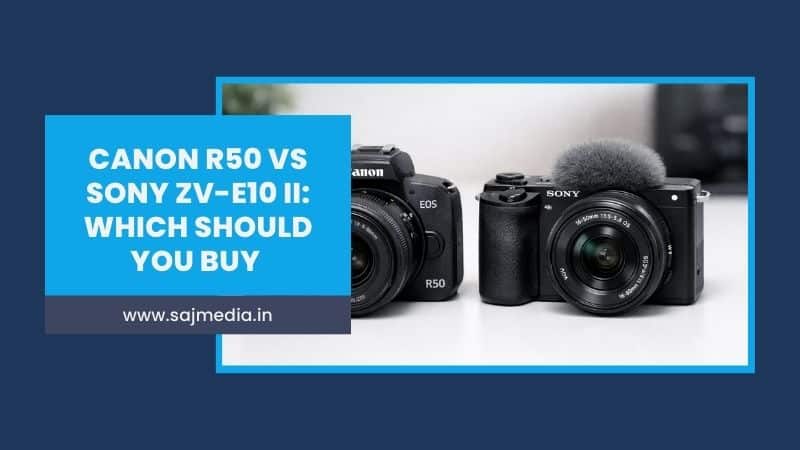
Best if You Want Interchangeable Lenses: Sony ZV-E10 II
Technically the Sony ZV-E10 II is not a compact — it is a small APS-C mirrorless. But it belongs in this conversation because it is the smallest interchangeable lens camera designed specifically for vloggers, and it is what you buy if you want the option to change lenses later.
The 26-megapixel APS-C sensor produces better footage than any of the compacts above in most conditions. 4K 60p with minimal rolling shutter, 10-bit S-Log3 recording, and Sony’s excellent autofocus all come in a body not much larger than the ZV-1 II.
The honest drawbacks: no in-body image stabilisation. The kit lens is the weak point — budget for a better lens if you buy this body. Slightly larger and heavier than true compacts.
Price: approximately $800 body only | Best for: creators who want to grow into better glass, anyone who shoots in varied or low-light conditions
Quick Comparison: Which One Is Right for You
| If you… | Buy this |
| Film yourself walking and talking solo | DJI Osmo Pocket 3 |
| Want the best photo and video hybrid | Canon PowerShot V1 |
| Need the most reliable autofocus | Sony ZV-1 II |
| Want to change lenses as you grow | Sony ZV-E10 II |
| Have a strict budget under $400 | DJI Osmo Pocket 3 (refurbished) or Sony ZV-1F |
| Shoot mostly vertical content for Reels/TikTok | DJI Osmo Pocket 3 (rotates to vertical natively) |
| Shoot in low light frequently | Sony ZV-E10 II — larger sensor wins here |
What Nobody Tells You Before Buying a Compact Vlog Camera
The camera is not the problem. Most people who are unhappy with their vlog footage are unhappy because of audio, not video quality. A $300 camera with a good microphone will almost always produce more watchable content than a $900 camera with poor audio.
Before upgrading your compact vlog camera, check whether a DJI Mic Mini or RODE Wireless GO would make a more noticeable difference. In most cases the answer is yes.
The second thing nobody mentions: stabilisation matters more than sensor size for walk-and-talk content. A 1-inch sensor on a gimbal — like the Osmo Pocket 3 — will produce smoother, more watchable footage than an APS-C sensor held in a shaky hand.
Buy for how you actually shoot, not for the spec sheet.
FAQ
The DJI Osmo Pocket 3 is the most accessible starting point for beginners. The built-in gimbal handles stabilisation automatically, face tracking keeps you in focus, and the rotating screen makes solo filming straightforward. You do not need to understand camera settings to get good footage from day one.
Yes, for vlogging specifically. The three-axis gimbal produces stabilization that no smartphone can match for walk-and-talk footage. The dedicated face tracking, 1-inch sensor, and directional audio all make a meaningful difference in output quality compared to even a high-end smartphone.
Yes. All cameras listed here shoot 4K video, which is more than sufficient for YouTube. The DJI Osmo Pocket 3 and Sony ZV-1 II both produce footage that looks professional on YouTube without any post-production color work required.
In well-lit indoor environments, yes. In dim indoor environments — living rooms with standard lighting, restaurants — the larger sensor cameras (Canon V1, Sony ZV-E10 II) will produce noticeably better results. The DJI Osmo Pocket 3 and Sony ZV-1 II can struggle in genuinely low light.
If your current phone is under three years old, start with external audio before buying a dedicated camera. A wireless microphone will improve your content quality more noticeably than a new camera. If your audio is already solid and you want better video quality and stabilization, a dedicated compact vlog camera is the right next step.
Conclusion
The best compact vlog camera is not the one with the biggest sensor or the most features. It is the one that comes out of your bag when the moment is there — because it is light enough, fast enough to switch on, and small enough that carrying it was never a debate.
For most creators, that is the DJI Osmo Pocket 3. Hybrid shooters who want a serious compact, the Canon PowerShot V1. For anyone who lives in Sony’s ecosystem and values autofocus above everything, the ZV-1 II.
Pick the one that matches how you actually shoot. Then go shoot.

Leave a Comment
Your email address will not be published. Required fields are marked *