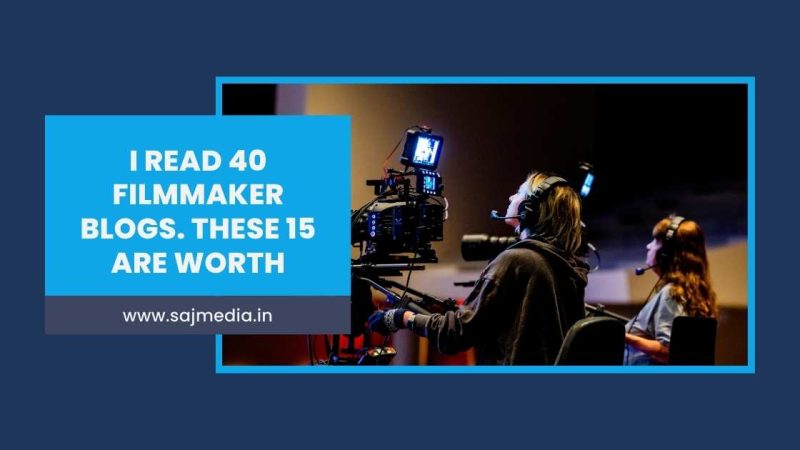
There are too many filmmaker blogs. That is the honest starting point.
Most of them post the same gear roundups, the same ‘how to shoot cinematic video’ articles that could have been written in any year from 2015 to now, and the same interviews that tell you nothing you didn’t already know. They exist to sell affiliate products or drive traffic to courses, not to actually make you better at filmmaking.
I went through forty of them. What follows is the shortlist — the filmmaker blogs that earned a permanent bookmark for a specific, honest reason. Not because they are the most famous. Because they are actually useful.
KEY TAKEAWAYS
- Most filmmaker blogs repeat the same advice — the ones worth following each have a distinct, specific focus
- No Film School remains the single best daily resource for working filmmakers
- StudioBinder is the best for visual storytelling breakdowns and production planning
- CineD is essential if you care about camera movement technology and gear accuracy
- The best filmmaker education is scattered across 15 very different sources — no single blog covers everything
Why Most Filmmaker Blogs Are Not Worth Following
Before the list — the filter. A filmmaker blog earns a follow when it does one of three things consistently: it teaches something specific and actionable, it covers news and gear with genuine accuracy, or it shares a perspective you cannot find anywhere else.
Most blogs fail at all three because they optimise for volume rather than value. They publish five posts a week when two good ones would serve their readers better. Cover every new camera release whether or not it matters. They explain the same concepts at a surface level without going deep enough to actually change how you work.
The fifteen below were selected because each one does at least one thing better than everything else in this space. That is the only criterion.
The 15 Filmmaker Blogs Worth Bookmarking
1. No Film School — nofilmschool.com
Best for: Daily news, gear coverage, and accessible filmmaker education
No Film School is the closest thing to a daily newspaper for working filmmakers. They cover camera releases, industry news, technique breakdowns, and interviews at a pace and depth that no other single filmmaker blog matches. The community forum is also genuinely active.
What separates it: the writing assumes you are a working creator, not a student. The advice is practical and the coverage is fast. If something important happens in the filmmaking world, NFS will have it within hours.
2. StudioBinder — studiobinder.com/blog
Best for: Visual storytelling breakdowns and production planning
StudioBinder built their reputation on free production templates — shot lists, call sheets, storyboards — and their blog extends that practical focus into deep visual analysis. Their shot-by-shot breakdowns of famous films and directors are some of the best free filmmaking education available anywhere.
If you want to understand why a scene works — what choices were made and why — StudioBinder’s analysis posts are the reference. They also maintain one of the best free production management tools for indie filmmakers.
3. CineD — cined.com
Best for: Camera technology, sensor tests, and gear accuracy
CineD is where you go when you need accurate technical information about cameras and lenses. Their sensor tests and dynamic range measurements are conducted with proper methodology, not just subjective impressions. When a new camera ships, CineD’s test results are more reliable than most published reviews.
If you are deciding between two cameras and need real technical data rather than marketing claims — CineD is the source.
4. PremiumBeat Blog — premiumbeat.com/blog
Best for: Post-production, colour grading, and music licensing
PremiumBeat’s blog covers the production and post-production workflow at a consistently high level. Their colour grading tutorials, editing technique breakdowns, and cinematography guides are well-written and practical. The fact that they sell royalty-free music does not compromise the editorial quality of the blog itself.
Particularly strong on DaVinci Resolve tutorials and colour science — subjects most filmmaker blogs cover poorly.
5. RedShark News — redsharknews.com
Best for: Technology intersection with production — AI, codec news, industry shifts
RedShark sits at the intersection of production technology and filmmaking practice. They cover codec developments, AI in video production, broadcast industry changes, and emerging tools with a level of technical depth that most filmmaker blogs cannot match.
If you want to understand where the technology is going — not just what gear exists today — RedShark is the most consistently forward-looking resource in this space.
6. Filmmaker Magazine — filmmakermagazine.com
Best for: Independent film culture, interviews, and distribution
Filmmaker Magazine covers independent cinema at the level where art and commerce intersect. Their interviews with directors and producers go beyond technique into the business and creative decisions behind independent projects. Essential reading if you care about the business side of filmmaking, not just the craft.
7. Raindance Blog — raindance.org/blog
Best for: Independent filmmakers at every stage — from script to distribution
The Raindance blog covers the full independent filmmaking journey. The writing ranges from beginner-accessible to genuinely advanced, and the connection to the Raindance Film Festival means the perspectives come from filmmakers actually working in the industry. Particularly strong on financing, distribution, and the realities of indie production.
8. IndieWire — indiewire.com
Best for: Industry news, criticism, and cultural context
IndieWire is not a how-to blog. It is journalism covering the film industry at the intersection of culture and commerce. For filmmakers who want to understand the broader context their work exists within — awards, distribution trends, streaming platform decisions — IndieWire is the most reliable source.
9. Noam Kroll — noamkroll.com
Best for: Director’s perspective on the craft — written from real experience
Noam Kroll is an LA-based director who writes about filmmaking from a practitioner’s perspective, not an educator’s. His posts on camera choice, cinematography decisions, and the business of independent filmmaking are some of the most honest writing in this space because they come from someone actively making films, not someone teaching about them.
The post frequency is lower than larger blogs — but the quality of each piece is consistently high.
10. Cinematography Database — cinematography.com
Best for: Cinematographers who want to study how working DPs actually light
Cinematography Database catalogs the technical approach of working directors of photography — the lenses, lights, and techniques behind specific scenes and films. For anyone who learns visually and wants to understand how professionals actually achieve specific looks, this resource is difficult to find anywhere else.
11. Shane Hurlbut’s Hurlblog — filmmakersacademy.com/blog
Best for: Lighting, camera, and on-set technique from an ASC cinematographer
Shane Hurlbut is a working Hollywood DP (Terminator Salvation, Act of Valor) who has been writing about his craft since 2009. The Hurlblog combines high-level professional insight with accessibility — he writes for filmmakers at every level, not just those working on large productions. The lighting breakdowns in particular are exceptional.
12. The Black and Blue — theblackandblue.com
Best for: Camera assistants and crew — the set perspective you never read about
Most filmmaker blogs are written from the director or DP perspective. The Black and Blue covers set life from the camera department’s view — the AC’s job, focus pulling, the logistics of working on a professional set. If you want to understand how a real production runs from the ground up, or if you are building a career as a camera assistant, this is one of the few blogs that actually covers it.
13. John Brawley’s Blog — johnbrawley.wordpress.com
Best for: Camera reviews written by a working DP — not a tech reviewer
John Brawley is an Australian DP with extensive credits who writes camera reviews from the perspective of someone using equipment on real productions. His assessments of new cameras — including early hands-on with Blackmagic cameras before most reviewers had access — are valued for the same reason: real production context, not lab tests.
14. Jonny Elwyn — jonnyElwyn.co.uk
Best for: Editors and post-production professionals
Jonny Elwyn’s blog is one of the few filmmaker blogs with a sustained focus on editing rather than production. He covers workflow, software, the business of being a freelance editor, and the craft of cutting in a way that is practical and specific. Essential reading if post-production is where you spend most of your time.
15. Motion Array Blog — motionarray.com/blog
Best for: After Effects, Premiere Pro, and motion graphics tutorials
Motion Array’s blog covers video editing and motion graphics at a tutorial level that is consistently clear and well-produced. If you use Adobe tools and want to learn specific techniques — transitions, colour effects, title animations — their tutorials are among the best free resources available without a subscription.
How to Actually Use These Filmmaker Blogs
Do not subscribe to all fifteen at once. That is how you end up with an inbox full of content you never read.
Start with two or three that match where you are right now in your filmmaking. If you are learning technique, start with StudioBinder and PremiumBeat. Trying to stay current on gear and industry news, start with No Film School and CineD. If you are building a career in independent film, add Filmmaker Magazine and Raindance.
Add others as your needs change. The goal is not to consume more content — it is to consume the right content for the specific problem you are working on right now.
FAQ
No Film School is the best starting point. It covers beginner-accessible techniques alongside professional-level content, publishes daily, and the writing assumes you are working toward becoming a filmmaker rather than just learning about it theoretically.
CineD for technical accuracy and sensor testing. No Film School for broader coverage and first-look reviews. John Brawley’s blog for camera assessments from a working DP’s perspective rather than a tech reviewer’s.
Yes — PremiumBeat for color grading and editing technique, Jonny Elwyn for the editor’s perspective and workflow, and Motion Array for After Effects and Premiere Pro tutorials specifically.
Raindance for the full independent filmmaking journey from script to distribution. Filmmaker Magazine for industry context and interviews. Noam Kroll for the director’s practical perspective on making films with limited resources.
No Film School, CineD, PremiumBeat, and IndieWire publish multiple times per week. StudioBinder, Raindance, and Filmmaker Magazine publish weekly or bi-weekly. Noam Kroll, John Brawley, and Jonny Elwyn publish less frequently but at consistently higher depth per post.
Conclusion
The internet does not have a shortage of filmmaker blogs. It has a shortage of ones worth following. The fifteen above each earn their place for a specific reason — depth, accuracy, perspective, or a focus that nobody else covers as well.
Bookmark the two or three that match where you are right now. Ignore the rest. Your time is better spent making films than reading about them.



Leave a Comment
Your email address will not be published. Required fields are marked *